
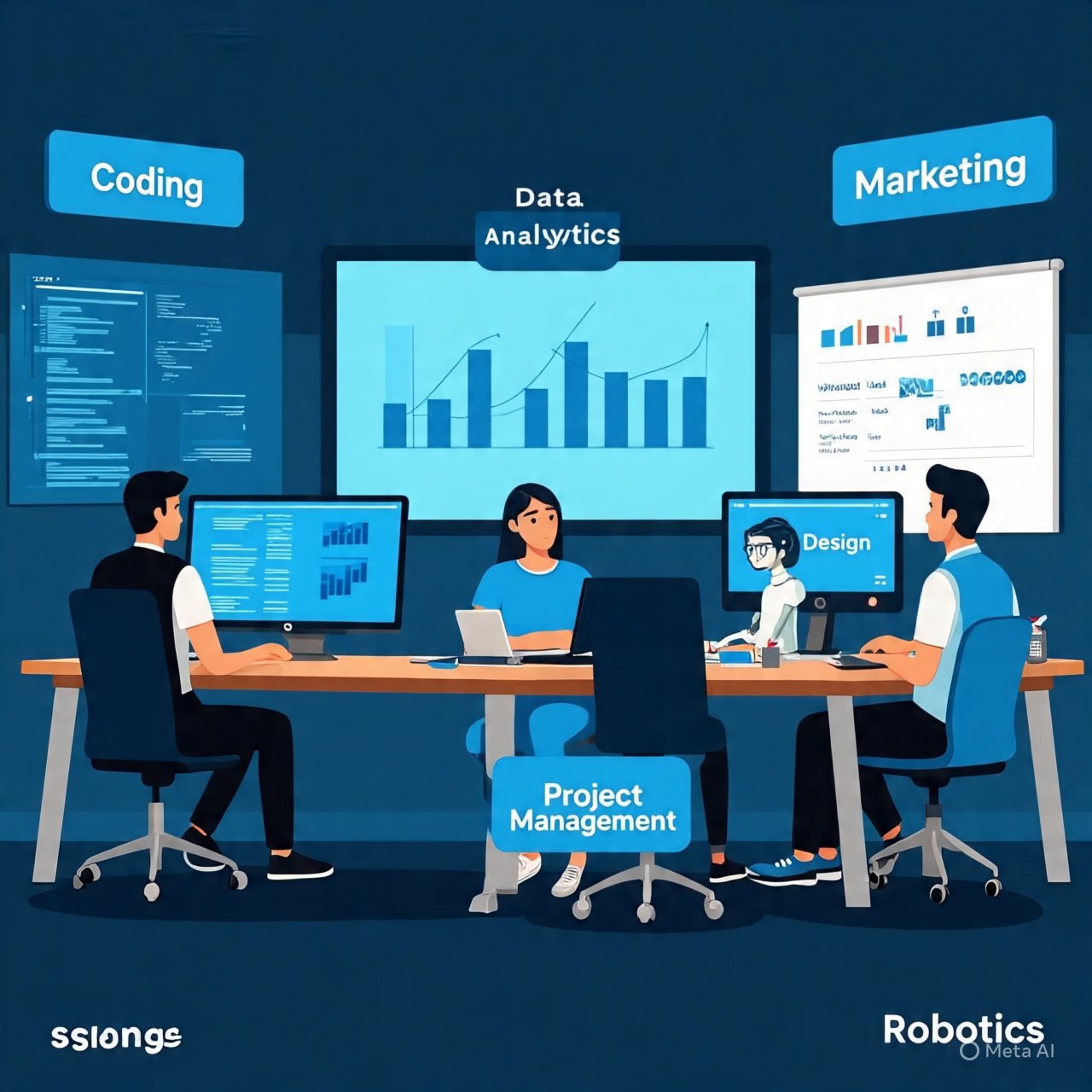
AI Toolkit Employers Expect from Modern Graduates
Artificial Intelligence is no longer a futuristic concept reserved for tech companies and research labs. It has become a fundamental part of the modern workplace. From marketing and finance to healthcare and education, organizations are rapidly integrating Artificial Intelligence tools to increase efficiency, improve decision-making, and automate repetitive tasks. As a result, employers in 2026 are increasingly looking for graduates who are comfortable working alongside Artificial Intelligence technologies.
For modern graduates entering the job market, understanding how to use AI tools effectively has become just as important as traditional skills such as communication, teamwork, and critical thinking. Employers no longer expect graduates to be AI experts, but they do expect them to understand how AI can enhance productivity and support smarter work processes.
This shift has created a new expectation: every graduate should have an AI toolkit. These tools help professionals research faster, communicate better, analyze data efficiently, and create high-quality content. Graduates who master these tools often stand out during hiring processes because they demonstrate adaptability, technological awareness, and a future-ready mindset.
This article explores the AI toolkit employers expect from modern graduates and explains why these tools are becoming essential in today’s professional environment.
Also Read: Understanding Environmental effects of gaming hardware
Why Employers Value Artificial Intelligence Skills
The modern workplace is evolving rapidly. Organizations are under constant pressure to innovate, reduce costs, and improve efficiency. AI technologies play a major role in achieving these goals.
Employers value candidates who can use AI tools because these individuals are able to complete tasks more efficiently. For example, AI-powered research tools allow professionals to gather insights quickly, while AI writing assistants help produce high-quality reports and communication materials in less time.
Another reason employers prioritize AI skills is adaptability. Technology is evolving faster than ever, and companies need employees who can quickly learn and integrate new tools into their workflow.
Furthermore, AI enables better decision-making. Many tools provide data-driven insights that help employees analyze information and make informed choices. Graduates who understand how to use these systems effectively can contribute more meaningfully to organizational success.
Ultimately, AI literacy signals that a graduate is ready for the future of work.
Artificial Intelligence Writing and Communication Tools
Clear communication is a critical skill in almost every profession. Modern workplaces require employees to write emails, reports, proposals, and presentations on a regular basis. AI writing tools have become valuable resources for improving the quality and clarity of professional communication.
Tools like Grammarly help users correct grammar mistakes, improve sentence structure, and refine tone. This ensures that written communication remains professional and effective.
Another powerful tool is ChatGPT, which can assist with brainstorming ideas, generating outlines, summarizing documents, and explaining complex topics. Many professionals use it to draft reports, prepare presentations, or refine content before submission.
These tools do not replace human creativity but instead enhance it. Graduates who can combine their ideas with AI-assisted writing tools often produce clearer, more polished work.
Artificial Intelligence Research and Knowledge Tools
Research is a critical component of many jobs, especially in fields such as consulting, marketing, policy analysis, and academia. Employers expect graduates to gather information quickly and accurately.
AI research assistants have transformed this process. Platforms such as Perplexity Artificial Intelligence provide concise explanations along with reliable sources, making it easier to verify information and explore new topics.
Another powerful Artificial Intelligence research system is Google Gemini, which helps professionals summarize documents, generate insights, and organize research materials.
By using these tools, graduates can quickly analyze complex topics, identify trends, and support their work with credible data. Employers appreciate candidates who can perform efficient research without spending excessive time searching for information.
Artificial Intelligence Productivity and Organization Tools
Modern workplaces involve juggling multiple responsibilities, deadlines, and projects. Artificial Intelligence powered productivity tools help professionals manage these tasks more effectively.
One widely used platform is Notion AI, which combines note-taking, project management, and Artificial Intelligence generated assistance in a single workspace. Professionals use it to organize information, track tasks, and collaborate with team members.
Artificial Intelligence productivity tools can summarize meeting notes, generate action items, and help employees stay organized throughout complex projects.
Graduates who are familiar with such systems demonstrate strong organizational abilities and time management skills—qualities that employers consistently value.
Artificial Intelligence Design and Creative Tools
Creativity plays an important role in fields such as marketing, advertising, social media management, and product design. Artificial Intelligence tools now make it possible for professionals without design backgrounds to create visually appealing content.
Platforms like Canva use Artificial Intelligence powered design suggestions to help users create presentations, infographics, marketing materials, and social media graphics quickly.
These tools simplify design tasks by recommending layouts, color combinations, and visual elements. This allows employees to produce professional visuals without extensive design training.
Graduates who can create compelling visual content using Artificial Intelligence tools add significant value to organizations, especially in communication and marketing roles.
Artificial Intelligence Data and Analytical Tools
Data analysis is becoming increasingly important across industries. Employers rely on data-driven insights to guide decision-making, identify trends, and evaluate performance.
Artificial Intelligence powered analytics tools allow professionals to process large datasets more efficiently. For students in technical fields, computational platforms like Wolfram Alpha help solve complex mathematical problems and perform scientific calculations.
Even in non-technical roles, Artificial Intelligence data tools help professionals interpret information and extract meaningful insights. Graduates who are comfortable working with data have a significant advantage in the modern job market.
Artificial Intelligence Learning and Skill Development Tools
Another important aspect of the Artificial Intelligence toolkit is continuous learning. The workplace is constantly evolving, and professionals must update their skills regularly.
Artificial Intelligence powered learning platforms personalize educational content and recommend resources based on a learner’s progress. This allows professionals to acquire new skills more efficiently.
Graduates who demonstrate a commitment to continuous learning show employers that they are proactive and adaptable—two qualities that are highly valued in dynamic industries.
The Role of Artificial Intelligence in Future Workplaces
The integration of AI into the workplace will continue to accelerate in the coming years. Many routine tasks are already being automated, allowing employees to focus on more strategic and creative work.
AI will increasingly assist with decision-making, customer interactions, and operational processes. However, human skills such as creativity, emotional intelligence, leadership, and ethical judgment will remain essential.
Graduates who understand how to combine AI tools with human insight will be best positioned to succeed in this evolving environment.
Responsible of Artificial Intelligence Use in the Workplace
While Artificial Intelligence tools offer significant benefits, responsible use is essential. Employers expect graduates to use these technologies ethically and thoughtfully.
This includes verifying information, maintaining originality in work, and protecting sensitive data. Blindly relying on AI without understanding the output can lead to errors or misinformation.
Professionals must also remain aware of privacy concerns and ensure that confidential information is handled appropriately.
Responsible Artificial Intelligence usage demonstrates professionalism and builds trust within organizations.
How graduates can build their Toolkit
Developing an AI toolkit does not require advanced technical expertise. Graduates can begin by exploring a few widely used tools and practicing how to integrate them into everyday tasks.
For example, students can use Artificial Intelligence writing tools to improve assignments, research assistants to explore academic topics, and productivity platforms to organize projects.
Over time, they can expand their toolkit by experimenting with additional tools that align with their career interests.
The goal is not to rely entirely on AI but to understand how it can enhance efficiency and creativity in professional work.
Conclusion
The expectations of employers are evolving as artificial intelligence becomes deeply embedded in modern workplaces. Graduates entering the workforce in 2026 must be prepared to collaborate with AI technologies that enhance productivity, research, communication, and creativity.
The Artificial Intelligence toolkit employers expect from modern graduates includes writing assistants, research tools, productivity platforms, design software, and analytical systems. Mastering these tools demonstrates technological awareness, adaptability, and a readiness to contribute to future-focused organizations.
However, the most successful professionals will not simply rely on Artificial Intelligence—they will use it strategically to complement human intelligence, creativity, and critical thinking.
Graduates who develop this balanced approach will stand out in the job market and thrive in the rapidly evolving world of work.
About The Author