
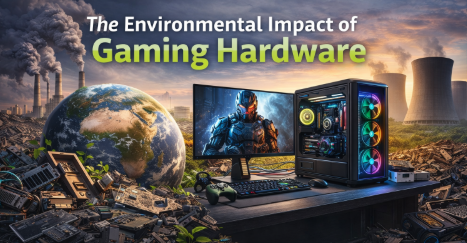
The global gaming industry has evolved from simple arcade machines to ultra-powerful consoles, custom-built PCs, and cloud-connected ecosystems. While innovation has enhanced performance, graphics, and immersive gameplay, it has also introduced a growing environmental footprint. The environmental effects of gaming hardware is a subject that deserves serious attention—not only from manufacturers but also from gamers themselves.
From raw material extraction to energy consumption and electronic waste, gaming hardware affects the environment at every stage of its lifecycle. Understanding these impacts helps consumers make more informed decisions while encouraging sustainable innovation across the industry.
Understanding the Gaming Hardware Lifecycle
To evaluate the environmental cost of gaming hardware, it is essential to examine its complete lifecycle:
-
Raw Material Extraction
-
Manufacturing and Assembly
-
Transportation and Distribution
-
Usage and Energy Consumption
-
Disposal and Electronic Waste
Each stage contributes to carbon emissions, resource depletion, and ecological strain.
Raw Materials: Environmental Impact of Gaming Industry
Modern gaming devices rely on a complex mix of metals and rare earth elements. Graphics cards, processors, motherboards, and storage drives require materials such as lithium, cobalt, gold, copper, and silicon.
Mining these materials involves:
-
Deforestation
-
Soil degradation
-
Water contamination
-
High carbon emissions
Rare earth mining, in particular, is energy-intensive and often associated with hazardous chemical byproducts. The extraction of lithium and cobalt, widely used in batteries and electronic components, also raises concerns about environmental degradation and resource scarcity.
While gamers focus on performance benchmarks and frame rates, the environmental cost begins long before the device reaches the store shelf.
Manufacturing: Energy-Intensive Production Processes
The production of gaming consoles and PC components consumes significant energy. Semiconductor fabrication facilities—often referred to as “fabs”—operate under highly controlled conditions and require enormous electricity inputs.
For example, leading manufacturers such as NVIDIA and Advanced Micro Devices design high-performance GPUs that demand advanced manufacturing processes. These processes rely on sophisticated supply chains and high-purity materials, both of which contribute to greenhouse gas emissions.
The environmental footprint during manufacturing includes:
-
Carbon emissions from electricity usage
-
Chemical waste from chip production
-
Water consumption for cooling and cleaning
-
Packaging materials
Even minor hardware upgrades, such as switching to a new GPU generation, indirectly fuel this cycle of production and environmental strain.
Energy Consumption During Gameplay
One of the most significant contributors to the environmental impact of gaming hardware is ongoing energy usage.
High-performance gaming PCs can consume between 300 to 800 watts under load, depending on components and cooling systems. Consoles, while generally more energy-efficient, still draw considerable power during extended gaming sessions.
To illustrate:
-
High-refresh-rate monitors increase power consumption
-
RGB lighting systems add incremental energy load
-
Overclocked GPUs elevate electricity usage
-
Multiple peripheral devices add to the total draw
Cloud gaming and always-online ecosystems also require data centers that operate 24/7, consuming massive electricity volumes. Although individual users may not directly see this consumption, it forms part of the broader environmental cost of digital gaming infrastructure.
Over time, cumulative global gaming hours translate into substantial energy demand.
Electronic Waste: The Growing Challenge
Electronic waste (e-waste) is one of the fastest-growing waste streams globally. Gaming hardware contributes to this issue due to rapid upgrade cycles and planned obsolescence.
When gamers replace:
-
Graphics cards every 2–3 years
-
Consoles every generation
-
Peripheral devices annually
-
Power supplies or storage drives
Old hardware often ends up in landfills or informal recycling sectors.
E-waste poses environmental risks because it contains:
-
Lead
-
Mercury
-
Cadmium
-
Brominated flame retardants
Improper disposal can contaminate soil and groundwater. While some companies offer recycling programs, consumer participation remains inconsistent.
The desire for the latest hardware, higher frame rates, and ray tracing capabilities accelerates turnover and disposal rates.
Packaging and Distribution Emissions
Beyond manufacturing and usage, transportation also plays a role in the environmental footprint of gaming hardware. Devices are typically manufactured in centralized locations and shipped worldwide.
The logistics chain involves:
-
Air freight (high carbon intensity)
-
Maritime shipping
-
Warehousing energy consumption
-
Retail distribution networks
Additionally, packaging materials—plastic inserts, foam protectors, laminated boxes—add to resource consumption and waste generation.
Although packaging improvements have been introduced in recent years, further optimization remains necessary.
The Push Toward Sustainable Gaming Hardware
The gaming industry is gradually responding to environmental concerns. Several hardware manufacturers are investing in energy-efficient designs and recyclable materials.
For example, Sony Interactive Entertainment and Microsoft have introduced energy-saving modes in their latest consoles to reduce standby power consumption. Energy-efficient chip architectures also reduce performance-per-watt ratios.
Sustainable initiatives include:
-
Carbon-neutral manufacturing goals
-
Use of recycled plastics in console shells
-
Reduced packaging sizes
-
Renewable energy adoption in production facilities
-
Hardware repairability programs
While progress is evident, industry-wide transformation requires both corporate accountability and consumer awareness.
What Gamers Can Do to Reduce Environmental Impact
Individual action, while small in isolation, becomes meaningful at scale. Gamers can reduce their environmental footprint through practical measures:
1. Extend Hardware Lifespan
Avoid unnecessary upgrades. Optimize existing systems through software tuning rather than immediate hardware replacement.
2. Choose Energy-Efficient Components
Look for power-efficient GPUs, CPUs, and monitors. Compare performance-per-watt metrics before purchasing.
3. Enable Power-Saving Modes
Activate sleep settings and auto-shutdown features on consoles and PCs.
4. Recycle Responsibly
Use certified e-waste recycling programs. Donate working hardware instead of discarding it.
5. Avoid Impulse Upgrades
Marketing cycles encourage frequent hardware turnover. Assess actual performance needs before upgrading.
6. Support Sustainable Brands
Encourage manufacturers that prioritize carbon neutrality and eco-friendly production practices.
Small behavioral shifts can collectively reduce demand-driven environmental pressure.
Balancing Innovation and Sustainability
Gaming hardware innovation is unlikely to slow down. Real-time ray tracing, AI-driven rendering, higher refresh rates, and VR integration continue pushing performance boundaries.
The challenge lies in balancing technological advancement with environmental responsibility.
Sustainable innovation could include:
-
Modular hardware upgrades instead of full replacements
-
Improved repairability and standardized components
-
Low-power gaming architectures
-
Circular economy models for hardware recycling
Industry regulation, consumer advocacy, and technological redesign must converge to ensure long-term sustainability.
The Future of Eco-Conscious Gaming
As climate awareness grows, sustainability is becoming a competitive differentiator. Companies that integrate environmental responsibility into hardware design may gain stronger brand trust.
Energy-efficient chip manufacturing, renewable-powered data centers, and recyclable materials are no longer optional—they are strategic necessities.
Gamers, too, are evolving. Increasingly, purchasing decisions factor in environmental ethics alongside performance metrics.
The future of gaming does not have to conflict with environmental stewardship. Responsible production, informed consumption, and smarter infrastructure can coexist with immersive experiences.
Final Thoughts
The environmental impact of gaming hardware is multifaceted. It begins with resource extraction, expands through manufacturing and energy consumption, and culminates in electronic waste disposal. While gaming delivers entertainment, community, and innovation, it also carries ecological responsibility.
Understanding this impact empowers gamers to make smarter decisions. Sustainable gaming is not about abandoning performance—it is about optimizing it responsibly.
As the industry continues to grow, the question is no longer whether gaming hardware affects the environment. The real question is how quickly stakeholders—manufacturers and consumers alike—are willing to adapt.
By extending hardware lifecycles, choosing energy-efficient components, recycling responsibly, and supporting sustainable brands, the gaming community can reduce its footprint while preserving the joy of play.
Gaming can remain immersive, powerful, and innovative—without costing the planet more than it should.
About The Author