
IP Licensing in Gaming: How It Works and Why It Matters
The global gaming industry is no longer just about original ideas developed in isolation. Today, some of the most successful games are built around powerful intellectual properties (IPs). From blockbuster superhero franchises to anime adaptations and sports leagues, IP licensing in gaming has become a major revenue engine for both content owners and game developers.
But what exactly is IP licensing in gaming? How does it work? And why is it so important in today’s digital entertainment economy?
This comprehensive guide explains everything you need to know — from legal foundations and business models to risks, costs, and future trends.
What Is IP Licensing in Gaming?
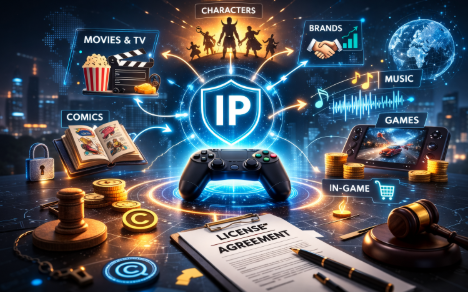
IP licensing in gaming refers to the legal agreement that allows a game developer or publisher to use intellectual property owned by another party. Intellectual property may include:
-
Characters
-
Logos
-
Storylines
-
Trademarks
-
Film franchises
-
Comic universes
-
Sports brands
-
Music catalogs
-
Real-world celebrities
Instead of creating everything from scratch, a gaming studio licenses an established IP to develop a game based on that brand.
For example:
-
A studio licenses a superhero franchise to create an action game.
-
A developer licenses a popular anime series for a mobile RPG.
-
A publisher licenses a sports league for a simulation game.
In each case, the IP owner retains ownership, while the gaming company receives limited rights under contract.
Types of Intellectual Property Used in Gaming
Understanding IP licensing requires clarity on the types of intellectual property involved.
1. Trademarks
These protect brand identifiers such as names, logos, and slogans. In gaming, trademarks ensure that brand identity remains legally protected.
2. Copyrights
Copyright protects creative works like artwork, music, scripts, character designs, and storylines.
3. Patents
Although less common in IP licensing deals, patents may cover specific game technologies or mechanics.
4. Personality Rights
Games featuring real athletes, celebrities, or influencers require licensing of their name, image, and likeness (NIL rights).
Why IP Licensing Is So Popular in Gaming
IP licensing in gaming offers strategic advantages for both sides of the agreement.
1. Instant Brand Recognition
Developing a new game is risky. However, attaching it to a known franchise reduces uncertainty. A recognizable IP comes with:
-
Built-in audience
-
Established fan base
-
Pre-existing brand trust
-
Easier marketing
This dramatically lowers customer acquisition costs.
2. Cross-Media Expansion
Entertainment companies use gaming to expand franchises into interactive formats. A movie or TV series can extend its lifecycle through a video game adaptation.
3. Revenue Diversification
IP owners earn licensing fees and royalties without directly investing in game development. Meanwhile, developers leverage brand power to increase sales.
How IP Licensing Agreements Work
A licensing agreement defines how the intellectual property can be used. These agreements are legally complex and highly detailed.
Key Elements of an IP Licensing Agreement
1. Scope of Rights
Defines:
-
Which characters or assets can be used
-
Geographic territories
-
Platforms (console, PC, mobile)
-
Duration of license
2. Financial Structure
Typically includes:
-
Upfront licensing fee
-
Royalty percentage on revenue
-
Minimum guaranteed payments
-
Revenue share clauses
3. Creative Control
IP owners often retain:
-
Approval rights over storylines
-
Control over character representation
-
Branding consistency review
4. Exclusivity
Some agreements are exclusive, preventing competitors from using the same IP.
Financial Models in IP Licensing
The economics behind IP licensing in gaming are critical to understand.
1. Flat Fee Licensing
The developer pays a one-time fixed amount to use the IP.
Pros: Predictable cost
Cons: Risk if the game underperforms
2. Royalty-Based Licensing
The developer pays a percentage of revenue or profit.
Pros: Lower upfront risk
Cons: Reduced margins over time
3. Hybrid Model
Combines:
-
Upfront payment
-
Ongoing royalties
-
Performance bonuses
This is the most common structure in large-scale deals.
Benefits of IP Licensing for Game Developers
IP licensing in gaming provides several strategic benefits:
1. Reduced Marketing Costs
Established IPs often market themselves through brand recognition.
2. Faster Market Penetration
Consumers are more likely to try a game based on a familiar franchise.
3. Higher Monetization Potential
Games based on strong IPs often achieve higher ARPU (Average Revenue Per User).
4. Merchandising Opportunities
Licensed games can extend into collectibles, DLC, and in-game purchases tied to the IP.
Risks and Challenges of IP Licensing
While IP licensing offers advantages, it also comes with risks.
1. High Licensing Costs
Major franchises demand substantial upfront payments.
2. Creative Restrictions
IP owners may limit narrative freedom, affecting innovation.
3. Dependency Risk
If the brand loses popularity, the game’s success may decline.
4. Contractual Complexity
Legal disputes can arise over revenue calculations or IP usage boundaries.
IP Licensing in Mobile Gaming
Mobile gaming has accelerated the demand for licensed content. Popular IPs from movies, TV shows, and influencers frequently appear in:
-
Gacha games
-
Casual puzzle games
-
Strategy RPGs
-
Battle royale formats
Mobile platforms benefit particularly from recognizable IP because user acquisition is highly competitive and expensive.
Legal Considerations in IP Licensing
Legal due diligence is essential in IP licensing agreements.
1. IP Ownership Verification
Developers must confirm that the licensor has legitimate ownership rights.
2. Territorial Restrictions
Licenses may be limited to specific countries.
3. Renewal Clauses
Contracts typically define extension terms.
4. Termination Conditions
Failure to meet sales targets may void the license.
Engaging experienced intellectual property attorneys is crucial for high-value agreements.
How Small Studios Can Approach IP Licensing
Many assume IP licensing is only for large corporations. However, smaller studios can also participate strategically.
1. Target Emerging IPs
Instead of blockbuster franchises, partner with:
-
Indie comic creators
-
YouTube personalities
-
Niche influencers
-
Independent authors
Licensing costs are significantly lower.
2. Revenue Share Deals
Offer higher royalty percentages in exchange for lower upfront payments.
3. Short-Term Licensing
Negotiate limited-duration agreements to reduce long-term risk.
The Future of IP Licensing in Gaming
The future of IP licensing in gaming is closely tied to:
-
Cross-platform integration
-
Metaverse ecosystems
-
NFTs and digital collectibles
-
AI-generated content
-
Global streaming franchises
As entertainment ecosystems become more interconnected, licensed gaming experiences will play a central role in brand expansion strategies.
Major media companies now treat gaming as a core pillar of franchise growth rather than a side product.
Is IP Licensing Worth It?
The answer depends on strategic goals.
IP licensing is ideal when:
-
You want faster market entry
-
You need brand credibility
-
You aim for short-term revenue boost
Original IP development is better when:
-
You want long-term brand ownership
-
You aim to build proprietary franchises
-
You prefer creative independence
Many large studios use a hybrid approach:
-
Develop original IPs
-
License established franchises
-
Acquire smaller IPs outright
This diversifies revenue and reduces dependency risk.
Final Thoughts
IP licensing in gaming is not just a legal formality — it is a strategic business decision that shapes product positioning, marketing potential, and long-term profitability.
In an industry where competition is intense and user acquisition costs continue to rise, leveraging established intellectual property can provide a powerful competitive advantage.
However, developers must balance opportunity with risk. Licensing agreements require careful negotiation, financial planning, and legal clarity. When executed correctly, IP licensing can transform a game into a cross-media success story.
As the gaming industry continues to evolve, intellectual property will remain one of its most valuable assets — and licensing will continue to drive collaboration between creators, studios, and global entertainment brands.
About The Author