
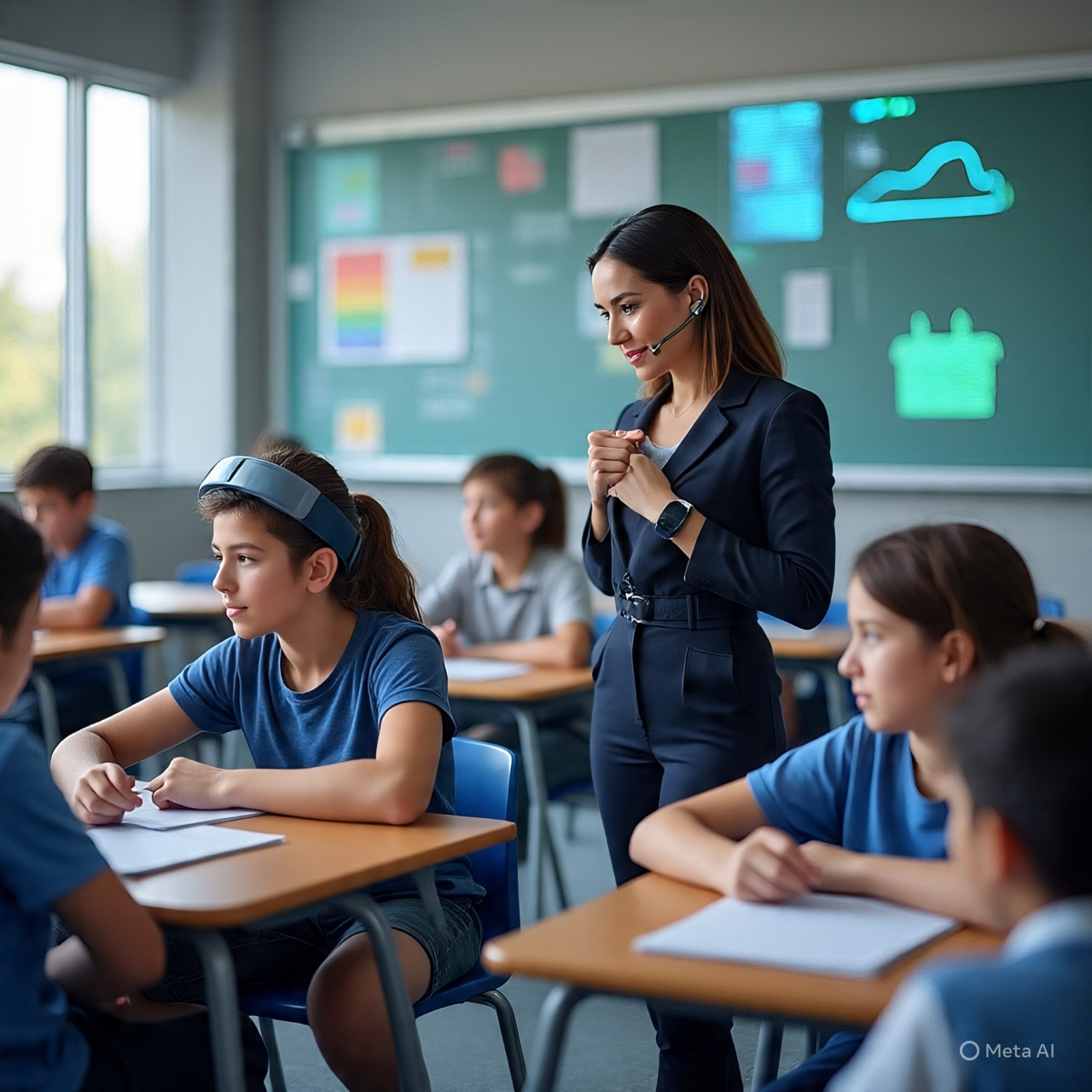
In 2026, artificial intelligence (AI) isn’t just a “buzzword” anymore — it’s a core part of how modern classrooms operate. What once felt futuristic has become practical, efficient, and, in many cases, indispensable. From personalized instruction to real‑time classroom analytics, AI tools are reshaping how teachers teach, how students learn, and how education systems make decisions.
This transformation isn’t happening in isolation; it reflects broader technological progression, lessons learned during the pandemic era, and rising expectations from students and parents. In the current educational landscape, AI is not replacing teachers — it’s amplifying their impact, unlocking learning potential previously constrained by time, resources, and one‑size‑fits‑all models.
Also Read: Data Science Internships
1. Personalized Learning Pathways: Tailoring Education at Scale
Perhaps the most visible transformation in 2026 classrooms is adaptive personalized learning. AI systems now continuously assess students’ strengths, gaps, interests, and learning pace to tailor instruction in real time.
Traditional classrooms require teachers to balance multiple achievement levels simultaneously — a demanding task. AI tools help by offering:
-
Dynamic skill assessments: As students interact with exercises, AI evaluates mastery in milliseconds, adjusting content difficulty on the fly.
-
Customized pathways: Instead of a linear syllabus, students receive individualized sequences of lessons, practice, and review materials based on their performance and learning style.
-
Micro‑recommendations: If a student struggles with a particular concept — say, algebraic equations — the AI can provide targeted hints, video explanations, or alternate representations until mastery is achieved.
For teachers, this means they can spend less time on administrative differentiation and more time on mentorship, facilitation, and higher‑order instruction.
2. Enhanced Engagement Through Intelligent Content
Engagement has always been a central challenge in education. In 2026, many AI tools automatically optimize content for student engagement and comprehension using multimedia, contextual adaptation, and gamification principles.
Examples include:
-
AI‑generated interactive modules: Systems that generate tailored visualizations, simulations, and interactive quizzes based on lesson objectives.
-
Conversational learning agents: Chatbot‑like tutors that use natural language to guide students through problem solving, answer questions, or clarify misconceptions.
-
Contextualized learning: AI tools that connect lessons to students’ interests — whether that’s sports, music, coding, or environmental science — to make abstract concepts relevant and motivating.
The result? Classrooms feel more dynamic, responsive, and student‑centered, and students who historically felt disengaged now find learning more accessible and relevant.
3. Real‑Time Analytics and Teacher Insights
Teachers have always worked with feedback — but much of it was retrospective: graded tests, occasional observations, or delayed results. AI accelerates and deepens feedback loops through real‑time learning analytics.
These systems provide:
-
Instant performance dashboards: Teachers can see at a glance which students are struggling with specific standards, which topics need class‑wide review, and where learning gaps are widening.
-
Predictive alerts: AI can flag students at risk of falling behind before grades drop, enabling early intervention.
-
Classroom heatmaps: Visualizations that show in‑class attention patterns, response consistency, and engagement trends during activities.
Importantly, these insights don’t replace teacher judgment — they inform it, giving educators data descriptors and patterns they couldn’t feasibly derive manually.
4. Automated Administrative and Assessment Tasks
One of the biggest sources of teacher burnout has long been administrative workload: grading, lesson planning, progress reports, and documentation. AI tools are significantly reducing this load, allowing teachers to focus on what matters most — meaningful instruction.
Key capabilities include:
-
Auto‑grading: Beyond multiple‑choice, modern systems can assess short answer writing, project submissions, and even programming assignments with context‑aware scoring.
-
Smart feedback generation: AI generates descriptive, actionable comments on student work, not just numerical scores — for example, identifying specific errors in reasoning or suggesting next steps in problem solving.
-
Lesson plan support: Teachers can input goals, standards, materials available, and time constraints; AI tools generate scaffolded lesson plans, activities, and assessment suggestions.
By automating routine tasks, AI tools free teachers to invest time in individualized support, creative projects, and professional growth.
5. Language Accessibility and Multilingual Support
Global classrooms are more linguistically diverse than ever. AI is bridging language barriers with real‑time translation and language support tools that make content accessible to non‑native speakers without diluting academic rigor.
Capabilities that are now commonplace:
-
Instant content translation: Lessons, worksheets, and instructions are translated instantly into students’ home languages while preserving nuance and academic vocabulary.
-
Language learning scaffolds: Real‑time captioning, glossary support, and grammar suggestions help multilingual learners follow along and participate with confidence.
-
Teacher‑aide AI interpreters: During discussions, speech‑to‑text and translation services help teachers understand and respond to student contributions in multiple languages.
This inclusivity enables truly equitable classrooms where linguistic diversity becomes a strength rather than a barrier.
6. Ethical and Responsible AI Integration
With all innovation, ethical considerations are paramount. By 2026, schools are implementing robust frameworks to govern AI use responsibly.
Key principles applied include:
-
Data privacy and consent: Tools comply with stringent data protection standards. Student profiles are encrypted, and sensitive information is shared only with consent.
-
Algorithmic transparency: Educators and administrators understand how AI decisions are made, reducing risks of bias or opacity in adaptive systems.
-
Human‑in‑the‑loop governance: Teachers always retain control over instruction; AI suggestions are optional and explainable.
-
Equity audits: Schools review AI systems to ensure they don’t inadvertently disadvantage any student group based on demographics, learning styles, or neurodiversity.
Responsible integration ensures that AI augments education without undermining dignity, fairness, or human agency.
7. Collaborative and Social Learning Amplified
AI doesn’t isolate learners — in fact, it’s enabling richer collaborative environments by:
-
Identifying complementary peer learning matches
-
Facilitating project team formation based on skills and interests
-
Supporting group work with AI mediators that balance participation
AI tools can monitor group dynamics and suggest interventions that foster inclusive collaboration.
Conclusion: A Partnership Between Teachers and AI
In 2026, AI has not replaced teachers — it has empowered them. Rather than being a technological disruptor that erodes human roles, AI has become an educational partner that enhances instruction, deepens insight, and elevates student experience.
The future of education is not AI versus educators — it’s AI with educators. In classrooms where this partnership thrives:
-
Teaching becomes more creative
-
Learning becomes more personalized
-
Barriers to achievement become lower
-
Education becomes more equitable
AI tools are transforming classroom teaching not by mechanizing it, but by humanizing it — ensuring that every student can learn at their pace, in their style, and with dignity.
As we move forward, the key will be thoughtful integration, ethical governance, and an unwavering focus on empowering teachers and learners alike
About The Author