
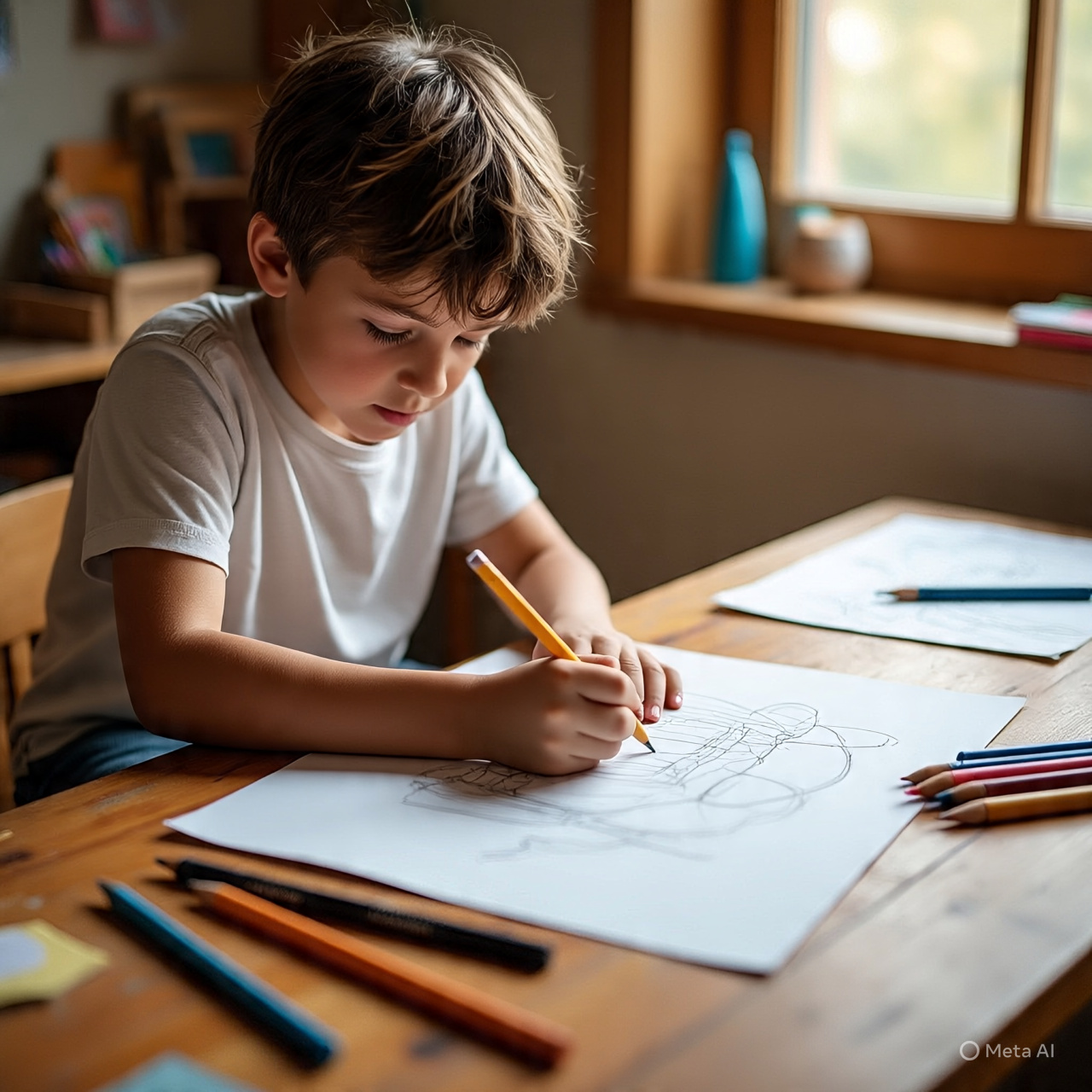
Understanding Critical Thinking and Creativity
In the rapidly evolving educational and professional landscape of 2026, one fact is clear: while technology, automation, and artificial intelligence are reshaping jobs and workplaces, certain skills remain uniquely human. Among them, critical thinking and creativity stand out as abilities that machines cannot replicate — at least not fully. For educators, this presents both a challenge and an opportunity: how can schools, colleges, and training programs cultivate these irreplaceable skills in students so they thrive in a world dominated by automation?
This blog explores why critical thinking and creativity are indispensable, how they can be effectively taught, and the strategies that ensure students are future-ready, adaptable, and innovative.
Also Read: 7 Powerful AI tools reshaping traditional classrooms
Why Critical Thinking and Creativity Are Irreplaceable
Automation excels in processing data, performing repetitive tasks, and executing predictable algorithms. AI can analyze patterns, optimize workflows, and even generate content in structured ways. But there are intrinsic qualities of human cognition that machines struggle to emulate:
-
Complex Problem Solving:
Machines follow rules and optimize for outcomes. Humans, however, can analyze ambiguous problems, weigh competing ethical considerations, and adapt solutions dynamically. -
Abstract and Lateral Thinking:
Creativity involves connecting seemingly unrelated ideas, thinking metaphorically, and envisioning possibilities beyond conventional boundaries — areas where AI is still limited. -
Emotional Intelligence and Contextual Judgement:
Decisions informed by empathy, cultural context, or moral reasoning remain distinctly human. Critical thinking enables individuals to integrate multiple perspectives, an essential skill in leadership and collaboration. -
Adaptability:
Rapid societal and technological changes demand agility. Students trained in creative problem-solving can pivot in response to uncertainty — a skill no automation can replace.
In short, critical thinking and creativity are strategic human assets that complement, rather than compete with, AI and automation.
The Current Gap in Education
Despite their importance, these skills are often underemphasized in traditional education systems. Most curricula still prioritize memorization, rote learning, and standardized testing. While students may excel in exams, many struggle when faced with novel problems or open-ended challenges.
Research indicates that employers increasingly value soft skills, creativity, and problem-solving over mere technical knowledge. In fact, studies by organizations like the World Economic Forum suggest that by 2030, the most in-demand skills will include critical thinking, complex problem-solving, creativity, and emotional intelligence — all of which require deliberate cultivation from early education onwards.
Strategies for Teaching Critical Thinking
Critical thinking is the ability to analyze information objectively, evaluate evidence, and make reasoned judgments. It is not innate but learned through practice and exposure. Educators can foster critical thinking in the following ways:
1. Socratic Questioning
Encourage students to ask “why” and “how,” not just accept facts at face value. Socratic questioning involves probing reasoning, assumptions, and evidence. For example:
-
“Why do you think this solution works?”
-
“What assumptions are you making?”
-
“Can you think of an alternative approach?”
This method teaches students to question, reason, and justify — core components of critical thinking.
2. Problem-Based Learning (PBL)
PBL places students in real-world scenarios requiring analysis and solution development. By tackling open-ended problems, students learn to:
-
Identify challenges
-
Gather relevant information
-
Evaluate options
-
Make informed decisions
For instance, a class could explore environmental sustainability issues, designing actionable solutions while considering economic, social, and ethical trade-offs.
3. Debates and Discussions
Structured debates encourage students to consider multiple perspectives. Assigning positions that students may initially disagree with forces them to research, reason, and articulate arguments coherently. This strengthens both reasoning and communication.
4. Reflective Thinking
Encourage students to reflect on their thought processes:
-
What influenced your decision?
-
Did any biases affect your judgment?
-
How would you approach it differently next time?
Reflection develops metacognition, the ability to evaluate one’s own reasoning, which is crucial for lifelong learning.
Strategies for Teaching Creativity
Creativity is the ability to generate original, useful, and flexible ideas. It flourishes in environments that promote freedom, curiosity, and experimentation. Educators can encourage creativity through:
1. Design Thinking
Design thinking is a structured, human-centered approach to solving problems creatively. It involves:
-
Empathy: Understanding the needs of users or stakeholders
-
Ideation: Brainstorming multiple solutions without judgment
-
Prototyping and Testing: Experimenting with ideas, learning from failure, and iterating
This method not only fosters creativity but also teaches resilience and adaptability.
2. Interdisciplinary Learning
Encourage students to connect knowledge across domains. For example:
-
Applying mathematical concepts to music composition
-
Using storytelling in science presentations
-
Exploring art and technology together
Interdisciplinary learning helps students see patterns, discover connections, and think beyond silos, which is a hallmark of creativity.
3. Encouraging Risk-Taking
Creativity thrives when students feel safe to experiment and fail. Teachers can cultivate this mindset by:
-
Celebrating innovative attempts, not just successful outcomes
-
Providing constructive feedback rather than punitive grading
-
Allowing iterative learning experiences
4. Idea Journals and Mind Mapping
Tools like journals and mind maps help students externalize and explore ideas, facilitating ideation and divergent thinking. Visualizing concepts encourages new connections and insights that linear thinking alone cannot produce.
Blending Critical Thinking and Creativity
Critical thinking and creativity are complementary. Creative ideas require evaluation and refinement to become viable solutions, while critical thinking without imagination can be rigid and uninspired. Schools can blend the two by:
-
Assigning project-based challenges where students design solutions to real-world problems.
-
Encouraging “what if” thinking, followed by structured analysis.
-
Implementing peer review sessions, where students critique and improve each other’s creative ideas.
For instance, a project to design a sustainable community garden requires students to generate creative concepts, evaluate feasibility, and optimize solutions collaboratively — harnessing both critical and creative faculties.
The Role of Technology in Supporting These Skills
Contrary to fears of AI replacing human creativity, technology in 2026 enhances teaching and learning of critical thinking and creativity:
-
AI-Powered Learning Platforms:
Platforms can provide personalized challenges, simulations, and scenario-based exercises that adapt to students’ skill levels. -
Virtual and Augmented Reality:
Immersive experiences allow students to explore complex systems, historical events, or scientific phenomena creatively and interactively. -
Collaborative Digital Tools:
Platforms like shared digital whiteboards, brainstorming apps, and coding environments foster teamwork and creativity beyond physical classroom limits. -
Data-Driven Feedback:
AI tools can analyze student responses, highlighting patterns in reasoning and idea generation. Teachers can use this insight to guide critical thinking development.
By integrating technology thoughtfully, educators can amplify human cognitive skills rather than replace them.
Challenges in Teaching These Skills
While the benefits are clear, there are challenges educators must navigate:
-
Standardized Curriculum Constraints: Many systems still prioritize test scores over deep skill development.
-
Teacher Training: Not all educators have been trained to facilitate creative and critical thinking effectively.
-
Assessment Difficulties: Measuring creativity or reasoning is more subjective than grading factual knowledge.
-
Cultural and Socioeconomic Barriers: Creativity and critical thinking may require resources, mentorship, and safe environments that aren’t equally available everywhere.
Addressing these challenges requires policy support, professional development, and inclusive access to learning tools.
Future-Ready Students: Why It Matters
The world of 2026 and beyond demands humans who can:
-
Adapt to rapidly changing industries
-
Generate innovative solutions to complex problems
-
Evaluate information critically in a data-saturated environment
-
Collaborate with diverse teams
Students trained in critical thinking and creativity are better equipped to navigate uncertainty, seize opportunities, and lead change. These skills are not just academic; they are lifelong competencies essential for personal and professional success.
Conclusion
Critical thinking and creativity are the cornerstones of education that cannot be automated. As AI and automation continue to reshape the workforce, human cognition — reasoning, imagination, and judgment — becomes more valuable than ever. Educators, policymakers, and learners must prioritize these skills, adopting teaching strategies that encourage questioning, exploration, and innovation.
By blending problem-based learning, design thinking, interdisciplinary approaches, and reflective practices, schools can nurture students capable of solving unprecedented problems, innovating boldly, and thriving in a complex world.
In a future dominated by technology, the uniquely human skills of critical thinking and creativity are not just advantages — they are essential survival tools. Teaching them effectively today ensures that tomorrow’s learners are not only employable but empowered to lead, innovate, and shape a better world.
About The Author