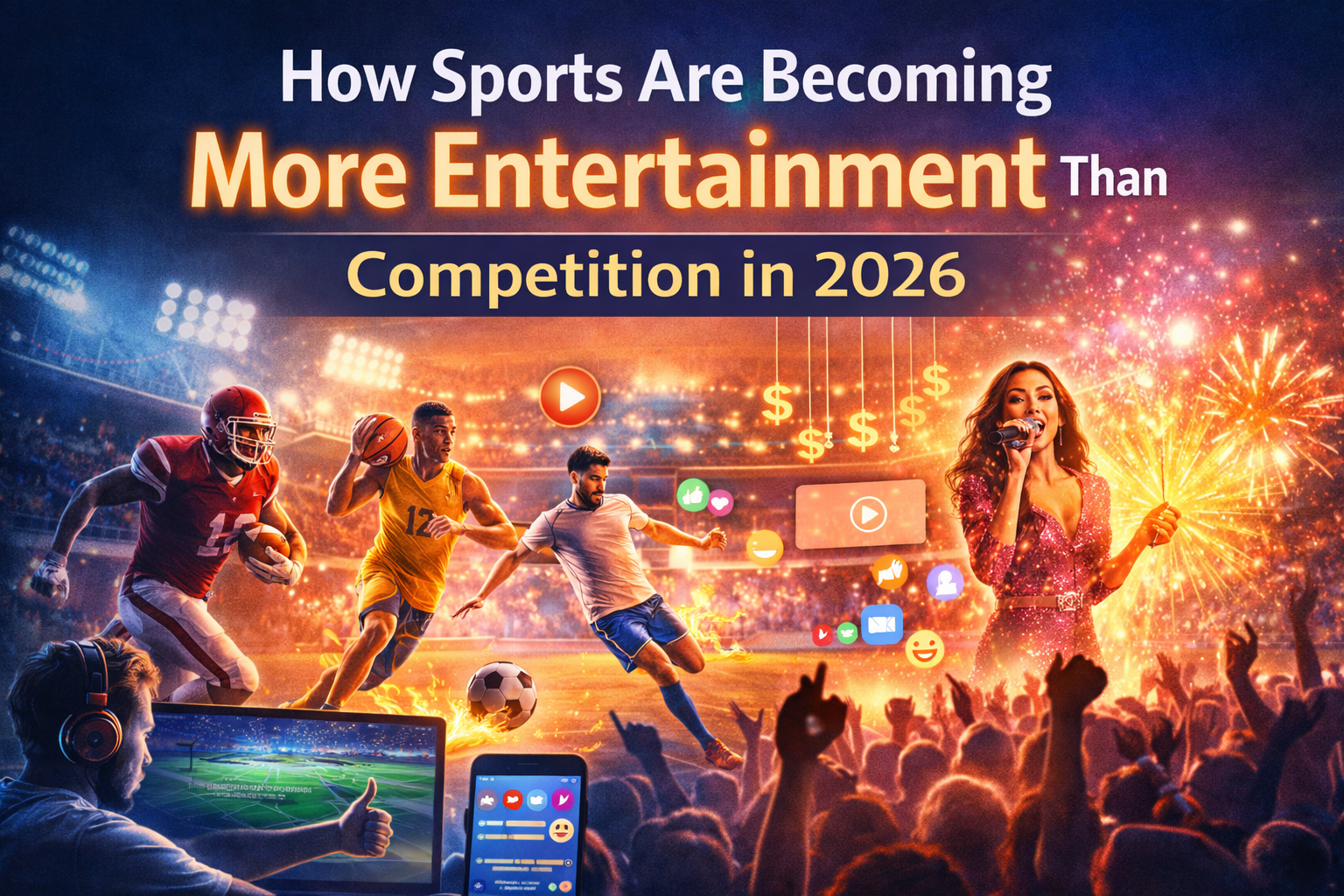
In 2026, sports are no longer just about winning or losing. While competition still exists at the core, the way audiences experience has fundamentally changed. What was once purely a test of skill, endurance, and strategy has evolved into a full-scale entertainment industry.
From high-energy stadium experiences to social media storytelling and celebrity-driven leagues, today are designed not only to determine a winner but to captivate, engage, and entertain. The shift is subtle but powerful—fans are no longer just spectators; they are consumers of a complete experience.
Also Read: Understanding 1% Rule for better living
This transformation raises an important question: are sports still about competition, or have they become a form of entertainment first?
The Evolution from to Spectacle
Traditionally, were rooted in discipline, training, and performance. Athletes were admired for their skills, and matches were valued for their unpredictability. However, over time, commercialization and media expansion began to reshape the industry.
In 2026, this evolution has reached a new level. Matches are now packaged as events, complete with music, lighting, storytelling, and digital engagement. The focus is not only on what happens on the field but also on how it is presented to the audience.
Leagues and organizations are investing heavily in production quality. Pre-match shows, halftime entertainment, and post-match analysis are designed to keep viewers hooked throughout. The experience feels closer to a concert or a live show than a traditional event.
The Influence of Media and Streaming Platforms
One of the biggest drivers of this transformation is the rise of digital media. Streaming platforms have changed how people consume. Instead of watching entire matches, many viewers now engage through highlights, short clips, and real-time updates.
This shift has forced organizations to adapt. Moments are now designed to be “shareable.” Celebrations, dramatic reactions, and unexpected incidents often gain more attention than the actual gameplay.
Social media platforms amplify this effect. A single viral clip can reach millions within minutes, turning athletes into global personalities overnight. As a result, they are increasingly structured around creating memorable moments rather than just maintaining competitive integrity.
Athletes as Entertainers and Brands
In the past, athletes were primarily known for their performance. Today, they are also influencers, content creators, and personal brands.
In 2026, an athlete’s value is not just measured by statistics but also by their ability to engage audiences. Their presence on social media, their personality, and their off-field activities play a significant role in their popularity.
Fans are no longer just following teams; they are following individuals. They want to know what athletes wear, how they train, what they think, and how they live. This personal connection transforms athletes into entertainers who must perform both on and off the field.
This shift has blurred the line between sport and celebrity culture. Athletes are now part of the broader entertainment ecosystem, sharing space with actors, musicians, and influencers.
Shorter Formats and Faster Engagement
Another major change is the growing popularity of shorter, faster formats. Modern audiences have shorter attention spans and prefer quick, engaging content.
have adapted by introducing formats that are:
-
Faster-paced
-
High-scoring
-
Visually dynamic
These formats prioritize excitement over endurance. They are designed to deliver maximum entertainment in minimum time.
This approach is particularly appealing to younger audiences who are used to consuming content in short bursts. For them, sports need to compete with streaming platforms, gaming, and social media for attention.
The Rise of Fan-Centric Experiences
In 2026, fans are no longer passive viewers. They are active participants in the experience.
Technology has enabled features such as:
-
Live voting
-
Interactive broadcasts
-
Fantasy leagues
-
Augmented reality experiences
These innovations make fans feel more connected and involved. The focus is not just on watching the game but on experiencing it in a personalized way.
Stadiums are also evolving. They now offer immersive environments with music, lighting, food experiences, and entertainment zones. Attending a match is no longer just about the game—it is about the entire event.
Commercialization and Sponsorship Influence
The increasing role of sponsors has also contributed to the entertainment shift. Brands invest heavily in, and in return, they expect visibility and engagement.
This has led to:
-
More advertisements integrated into gameplay
-
Branded segments and events
-
Collaborations with celebrities and influencers
While this brings financial growth, it also changes the nature. The focus shifts from pure competition to audience engagement and brand value.
In some cases, commercial interests influence scheduling, formats, and even rules to make the sport more appealing to viewers.
The Role of Technology and Innovation
Technology has transformed how are played, viewed, and experienced.
In 2026, advancements such as:
-
Virtual reality viewing
-
AI-driven analytics
-
Real-time data visualization
have made sports more interactive and engaging.
Fans can now watch games from multiple angles, access detailed statistics instantly, and even experience matches virtually. This level of immersion enhances entertainment value and keeps audiences engaged.
At the same time, technology is used to create dramatic narratives around matches. Data, graphics, and storytelling combine to make every game feel like a high-stakes event.
The Blurring Line Between and Entertainment
The integration of music, fashion, and celebrity culture has further blurred the line between and entertainment.
Major sporting events now feature:
-
Celebrity appearances
-
Live performances
-
Fashion statements
-
Viral moments
Athletes collaborate with brands, appear in advertisements, and engage in cross-industry partnerships. This creates a hybrid space where sports are not just competitions but cultural events.
In many ways, have become a form of storytelling. Narratives around rivalries, comebacks, and personal journeys are crafted to keep audiences emotionally invested.
The Impact on Competition and Integrity
While the entertainment shift has brought growth and popularity, it also raises concerns.
Some critics argue that the focus on entertainment may:
-
Dilute the competitive spirit
-
Prioritize spectacle over skill
-
Put pressure on athletes to perform beyond the game
There is a risk that sports could lose their authenticity if entertainment becomes the primary focus.
However, others believe that this evolution is necessary. To remain relevant in a highly competitive entertainment landscape, must adapt and innovate.
The challenge lies in maintaining a balance between competition and entertainment.
Why This Shift Is Happening
The transformation of sports is driven by several interconnected factors.
First, audience expectations have changed. People now seek experiences, not just outcomes. They want excitement, engagement, and emotional connection.
Second, competition for attention is intense. Sports are competing with movies, streaming platforms, gaming, and social media. To stay relevant, they must offer something unique and engaging.
Third, technology has enabled new possibilities. It has expanded how sports can be presented and consumed, making entertainment a natural extension.
Finally, economic incentives play a major role. Entertainment-driven sports generate higher revenue through sponsorships, advertising, and global reach.
The Future of in an Entertainment-Driven World
Looking ahead, the trend is likely to continue. Sports will become even more integrated with entertainment, technology, and culture.
We can expect:
-
More immersive viewing experiences
-
Greater personalization for fans
-
Increased collaboration with other industries
-
Continued evolution of formats and rules
However, the core essence of sports—competition—will not disappear. It will coexist with entertainment, creating a hybrid model.
The most successful organizations will be those that can balance both elements effectively.
Conclusion: A New Era of Sports
In 2026 are no longer confined to stadiums and scoreboards. They have become a global entertainment phenomenon that combines competition with storytelling, technology, and cultural influence.
This transformation reflects broader changes in society. People are seeking experiences that are engaging, interactive, and emotionally resonant. Sports have adapted to meet these expectations.
While the shift toward entertainment brings challenges, it also opens up new opportunities for growth and innovation.
In the end, are not losing their identity—they are evolving. And in this evolution, they are becoming more dynamic, more inclusive, and more exciting than ever before.
About The Author