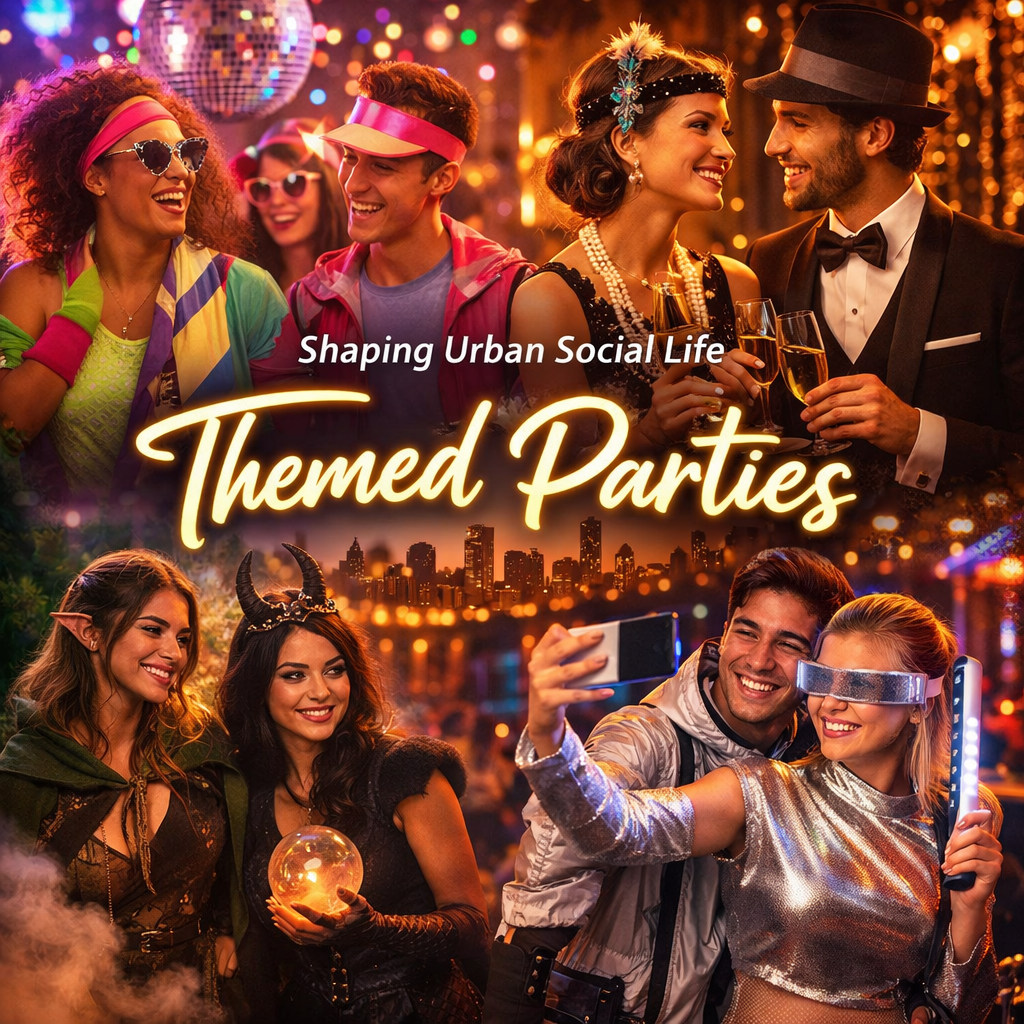
Urban social life is evolving, and nowhere is this transformation more visible than in the way cities celebrate, mingle, and interact. Among the many trends shaping nightlife and social gatherings, themed parties have emerged as a powerful force, redefining how people connect, express themselves, and experience culture. From neon glow nights to retro throwback evenings, themed parties are no longer just about dressing up—they are becoming cultural touchstones in urban life.
In this blog, we explore seven ways themed parties are reshaping social life in cities worldwide.
Also Read: Top 10 Party Themes in 2026
1. Encouraging Creativity and Self-Expression
One of the most immediate impacts of themed parties is their ability to encourage creativity. Urban dwellers are constantly looking for ways to express individuality, and themed parties provide a structured yet flexible canvas for personal style. Whether it’s a 1920s Gatsby-inspired event, a futuristic sci-fi night, or a Bollywood glam soirée, these gatherings allow attendees to push their creative boundaries.
People spend weeks curating outfits, experimenting with makeup, and designing accessories that reflect the theme. This process of creative engagement doesn’t just stop at appearance; it extends to performance, body language, and social interaction. The result is a social environment that celebrates individuality, giving urbanites a rare opportunity to step outside their daily routines and embrace imaginative personas.
2. Strengthening Social Bonds
Themed parties naturally foster social interaction. When a group of people shares a common theme, it provides a conversation starter and a sense of belonging. For instance, at a “Masquerade Ball,” the mystery behind each mask sparks curiosity, while at a “1980s Throwback Night,” shared nostalgia becomes a bridge between strangers.
In urban environments, where the fast pace of life can make forming connections challenging, themed parties serve as social lubricants. People are more willing to engage, network, and bond when they feel part of a collective experience. The shared excitement and energy create lasting memories, strengthening relationships among friends and even encouraging new connections among attendees.
3. Influencing Urban Culture and Trends
Themed parties don’t just reflect culture—they actively shape it. DJs, event planners, and nightlife organizers constantly innovate themes that resonate with contemporary trends, from sustainability-focused eco parties to pop-culture-inspired cosplay events.
These gatherings influence fashion, music, and lifestyle choices, creating ripple effects across urban culture. For example, a surge in retro-themed parties can revive vintage fashion trends, while electronic dance music (EDM) nights popularize certain soundscapes. Urbanites often bring elements from themed events into daily life, whether it’s adopting a bold hair color or experimenting with music playlists.
4. Offering Escapism in Urban Life
City life can be stressful, with long work hours, crowded public spaces, and constant digital connectivity. Themed parties provide a temporary escape from these pressures. By immersing themselves in a different world, attendees experience a break from routine, allowing them to relax, recharge, and live in the moment.
The power of escapism is particularly strong when themes involve fantasy, historical periods, or futuristic scenarios. People can temporarily inhabit personas far removed from their everyday selves, which can improve mood, creativity, and mental well-being. In a world dominated by deadlines and responsibilities, these events offer urbanites a socially acceptable way to indulge in joy and spontaneity.
5. Promoting Inclusivity and Diversity
Modern themed parties increasingly celebrate diversity and inclusivity. Event organizers are designing themes that welcome a wide spectrum of identities, backgrounds, and experiences. LGBTQ+ inclusive nights, gender-neutral costume parties, and culturally inspired gatherings allow participants to feel seen, respected, and celebrated.
By removing barriers to participation, themed parties contribute to a more inclusive urban social fabric. Attendees can express their identities freely, interact with diverse groups, and gain exposure to different perspectives. Over time, this can enhance tolerance, empathy, and cultural understanding within urban communities, making themed parties not just entertaining but socially meaningful.
6. Driving Economic and Creative Industries
Themed parties are not just social phenomena—they are economic drivers. Urban nightlife relies heavily on themed events to attract audiences, creating demand for performers, DJs, decorators, caterers, costume designers, and marketers.
Creative industries benefit enormously: local designers sell custom outfits, florists and decorators craft immersive environments, and musicians experiment with themed soundtracks. Bars, clubs, and event spaces see higher footfall, while tourism boards sometimes promote signature themed events to attract visitors.
Moreover, themed parties provide platforms for small businesses and emerging artists to showcase their talents. In this way, they contribute to the vibrancy and economic sustainability of urban culture, reinforcing the symbiotic relationship between social life and creative industries.
7. Shaping Digital and Social Media Culture
Themed parties have a unique synergy with social media, amplifying their impact on urban social life. Platforms like Instagram, TikTok, and Snapchat thrive on visually engaging content, and themed parties are a perfect fit. Attendees post photos, videos, and stories that showcase costumes, decorations, and experiences, which in turn promote the events to wider audiences.
This digital amplification changes how urbanites perceive social events. Parties are no longer just physical gatherings—they become shareable moments, contributing to online identity, community building, and trend creation. Viral party hashtags and influencer participation can transform local events into citywide or even global phenomena, making themed parties an essential part of contemporary social and digital culture.
Conclusion
Themed parties are more than just a nightlife trend—they are shaping the very fabric of urban social life. From encouraging creativity and self-expression to promoting inclusivity, driving economic growth, and shaping digital culture, these events have become pivotal in how city dwellers connect and experience culture.
As urban spaces continue to evolve, themed parties will likely grow even more immersive, interactive, and influential. Whether through nostalgia, fantasy, or avant-garde innovation, these gatherings remind us of the human need for creativity, connection, and celebration. For urbanites, participating in a themed party is no longer just about fun—it’s a statement, a social experiment, and a cultural experience rolled into one.
So next time you see an invitation to a “Neon Jungle Night” or a “Roaring Twenties Gala,” remember: it’s more than a party—it’s a window into the evolving heartbeat of urban social life.
About The Author