Holi is widely recognized as the festival of colors — a vibrant celebration filled with music, laughter, and clouds of bright Gulal (गुलाल) in the air. Yet beyond the spectacle lies a profound cultural and spiritual legacy. The ancient rituals of Holi were never merely about play; they were deeply symbolic acts rooted in purification, renewal, devotion, and social harmony. Even today, these rituals continue to hold relevance, offering timeless lessons in resilience, community, and inner transformation.
Understanding the ancient traditions allows us to see the festival not just as a day of celebration, but as a powerful cultural phenomenon that bridges mythology, seasonal change, and human connection.
The Sacred Fire of Holika Dahan: Triumph of Good Over Evil
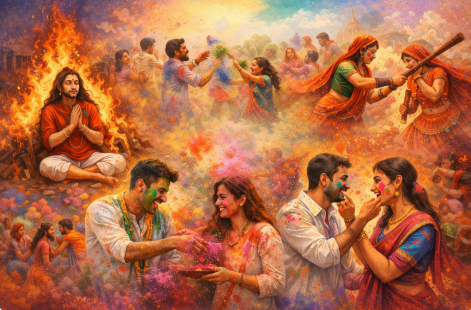
The celebration of Holi begins with Holika Dahan, the ceremonial bonfire lit on the eve of the festival. This ritual is rooted in the legend of Prahlada and Holika, as described in the Bhagavata Purana.
According to tradition, Prahlad’s unwavering devotion to Lord Vishnu angered his father, the tyrannical king Hiranyakashipu. In an attempt to kill him, Prahlada was placed in a fire alongside Holika, who possessed a magical boon that protected her from flames. However, divine justice prevailed — Holika was consumed by the fire, while Prahlada emerged unharmed.
Why It Still Matters Today
The ritual of Holika Dahan symbolizes the victory of faith and righteousness over arrogance and evil. In modern life, this message remains deeply relevant. The bonfire is not merely symbolic of a mythological event; it represents the burning away of ego, negativity, and destructive tendencies within ourselves.
In an age marked by social tension and personal stress, this ritual invites reflection: What must we let go of to move forward? What inner “Holika” must we surrender to allow resilience and goodness to prevail?
The Ritual of Playing with Colors: A Celebration of Equality
The most recognizable aspect of the festival is Rangwali Holi — the joyful throwing of colored powders and water. Historically, this tradition carries cultural and spiritual significance. In ancient India, colors were derived from flowers, herbs, and medicinal plants such as turmeric, neem, and tesu blossoms. These natural pigments were believed to promote health during the changing seasons.
Holi also draws inspiration from the playful legends of Lord Krishna and Radha in the region of Braj. The playful exchange of colors symbolized affection, unity, and the transcendence of social barriers.
The Social Significance
In ancient times, rigid caste and social hierarchies defined everyday life. Holi temporarily dissolved these boundaries. People from all backgrounds celebrated together, applying colors without distinction. Kings and commoners alike participated in the festivities.
Today, this ritual remains a powerful reminder of equality. For one day, differences of status, wealth, and identity blur beneath layers of vibrant color. The message is clear: humanity is shared before it is divided.
Seasonal Renewal and Agricultural Roots
The festival is celebrated at the end of winter and the beginning of spring, aligning with the agricultural calendar. In rural communities, it marks the harvest season — a time of gratitude for abundance and fertility.
Ancient rituals often included offerings of new crops into the Holika fire, symbolizing thanksgiving and hope for future prosperity. This agricultural connection reflects humanity’s enduring relationship with nature.
Modern Relevance
While urban celebrations may overlook this connection, the environmental message of the festival is more significant than ever. The festival reminds us of our dependence on seasonal cycles and ecological balance. Reviving the practice of natural colors and eco-friendly celebrations aligns with the ancient spirit of harmony with nature.
The Tradition of Forgiveness and Reconciliation
One of the most overlooked ancient rituals of this festival is the practice of reconciliation. Traditionally, people would visit friends, neighbors, and even estranged acquaintances to apply a small amount of color and exchange sweets. This act symbolized forgiveness and renewal of relationships.
The phrase “Bura na mano, Holi hai” reflects this sentiment — an invitation to let go of grievances and embrace goodwill.
Why This Ritual Endures
In a world shaped by digital communication and social fragmentation, genuine reconciliation is rare. This festival’s ancient emphasis on repairing relationships offers a powerful counterbalance. It encourages emotional cleansing alongside physical celebration. Forgiveness remains one of the most transformative human practices — and Holi institutionalizes it within culture.
Music, Dance, and Collective Joy
Traditional Holi celebrations included devotional songs known as “phag” and community dances in temple courtyards and village squares. These performances were not merely entertainment but expressions of shared identity and spiritual devotion.
Communal singing reinforced bonds, preserved oral history, and provided a space for creative expression.
Contemporary Significance
Modern parties may feature DJs and amplified music, but the core idea of collective joy persists. Humans are inherently social beings. Ritualized celebration provides psychological relief, strengthens community ties, and fosters belonging.
Ancient Holi rituals recognized that joy itself is sacred — a concept that remains vital in fast-paced, stress-heavy societies.
Symbolism of Color: Emotional and Spiritual Dimensions
Each color used during carries a symbolic meaning:
-
Red represents love and fertility
-
Yellow signifies knowledge and auspiciousness
-
Green symbolizes renewal
-
Blue reflects divine energy
-
Pink embodies compassion
In ancient practice, color application was not random but symbolic of blessings and intentions.
Modern Interpretation
Color psychology today confirms what ancient traditions intuitively understood — color influences emotion. Holi’s vibrant palette serves as a collective emotional reset, replacing monotony with vitality.
In corporate and urban environments often dominated by grayscale routines, Holi reintroduces sensory richness and spontaneity into life.
Ritual Fasting and Spiritual Preparation
In many regions, devotees observe partial fasting or spiritual discipline. Temple visits and prayers precede the celebration, reinforcing that Holi is both sacred and social.
This balance between devotion and enjoyment reflects a broader philosophy within Indian traditions: life is to be celebrated, but with awareness and reverence.
Its Relevance Today
In modern celebrations, the spiritual dimension can sometimes be overshadowed. Yet reconnecting with the reflective aspect deepens its meaning. Mindfulness before festivity ensures celebration does not become excess.
The ancient rituals encourage equilibrium — celebration grounded in consciousness.
Community Feasting and Shared Sweets
Traditional Holi foods such as gujiya, malpua, and thandai were prepared collectively in households and shared widely. Food functioned as a medium of connection.
Offering sweets symbolized sweetness in speech and conduct. Sharing meals dissolved formalities and encouraged open conversation.
A Lesson for Modern Living
In an era of individual consumption and isolated dining habits, communal feasting retains immense value. Holi’s culinary traditions remind us that food is culture, memory, and relationship woven together.
Women’s Participation and Cultural Expression
Certain regional rituals, such as Lathmar Holi in Barsana, highlight women’s active and symbolic roles within the celebration. Historically, Holi provided a socially accepted space for playful expression and reversal of norms.
This temporary inversion of power structures allowed suppressed emotions to be released in culturally sanctioned ways.
Contemporary Reflection
Even today, Holi represents freedom of expression. It offers a rare collective pause from rigid roles and expectations. The ancient understanding that societies require structured outlets for emotional release remains psychologically insightful.
The Enduring Philosophy of Holi
At its core, Holi is a festival of transformation:
-
Fire transforms destruction into purification.
-
Color transforms difference into unity.
-
Spring transforms barrenness into renewal.
-
Forgiveness transforms conflict into harmony.
These themes are not confined to mythology; they are universal human experiences.
In the modern world — characterized by polarization, environmental strain, and rapid change — Holi’s ancient rituals provide grounding. They remind us that renewal is cyclical, that unity is possible, and that joy can coexist with reflection.
Why Ancient Rituals Still Matter
Rituals are not relics of the past; they are living frameworks for meaning. The ancient practices of Holi endure because they address fundamental human needs:
-
The need for belonging
-
The need for purification
-
The need for equality
-
The need for joy
-
The need for renewal
When celebrated with awareness, Holi becomes more than a festival — it becomes a cultural philosophy.
About The Author